One of the things about Black Bob that I found interesting was his lawsuit won at the hands of his friend and former attorney, now judge, Andrew Jackson. It was a lawsuit against a schoolmaster, Anderson Lavender, who assaulted Black Bob for talking proper on April 25, 1800. The Grand Jury of Davidson County indicted him on this charge. Andrew Jackson, Archibald Roane (future Governor) and David Campbell were the judges when the suit was before the Superior Court, all freemasons in Nashville.
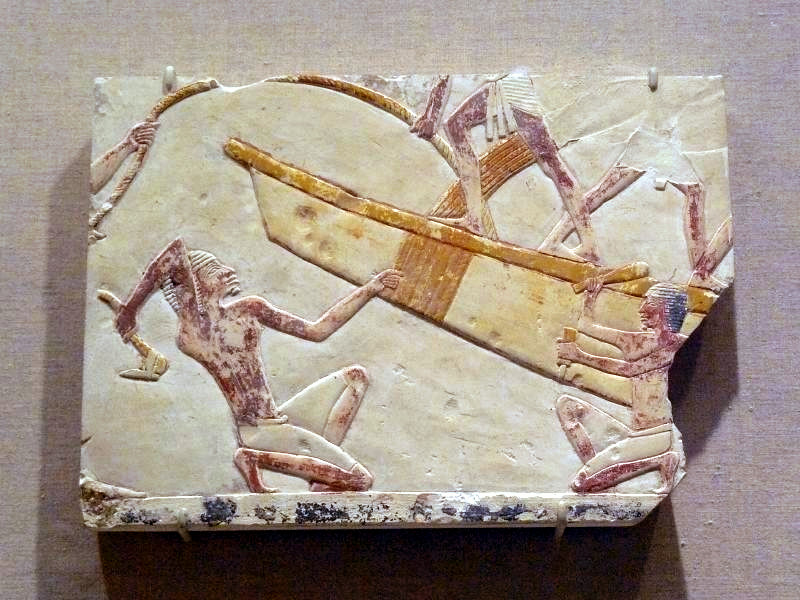
John Hamilton, the attorney for the State wrote in May of 1800 that Anderson Lavender, “Did make an assault and battery with an intent him the said Bob then and there feloneously, wilfully and of his malice aforethought to kill & murder, against the Statue in such case made and provided, and against the peace and dignity of our State.” Tr, TdaCo-MDSC Law Min. Bk., 1788-1803, pp 316-317. From Legal Papers of Andrew Jackson pg 162. What does the foot-adze that Lavender carried in his right hand to kill Bobb look like?


This brings me back to Kemet and its tools. The iron for why people settled in Tennessee during the frontier days. Why they needed Africans in the first place to conquer this land. The knowledge. Metorietic iron on a wood handle was used in the Opening of the Mouth Ceremony. The irony (no pun intended), of Black Bob being assaulted with an adze, similar to the instrument used in rituals to Open the Mouth, or be seen.
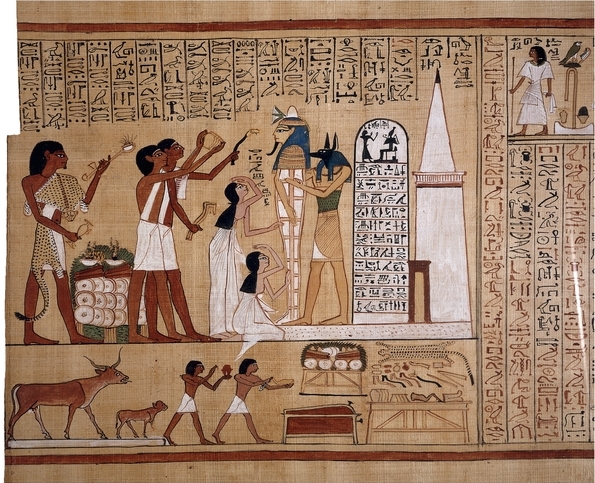
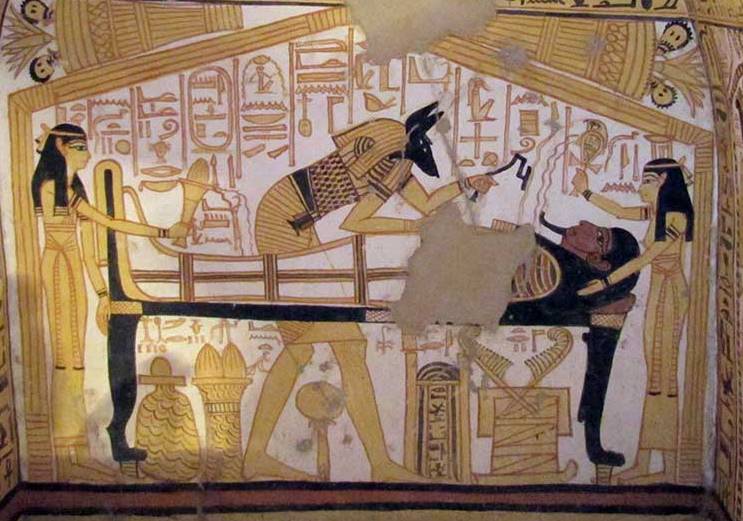
The ahnetjer (Manuel de Codage transliteration: aH-nTr) depicted as an adze-like instrument,[3] was used in the Opening of the Mouth ceremony, intended to convey power over their senses to statues and mummies. It was apparently the foreleg of a freshly sacrificed bull or cow with which the mouth was touched
The Egyptian terms for the ceremony are wpt-r and wn-r, both translating literally to "opening of the mouth." The verb wpi denotes an opening that entails splitting, dividing or separating, and is used to describe the separation of two combatants, the dividing of time or even a determination of the truth. The verb wn emphasizes accessibility and exposure, used in contexts such as wn-hr, literally "open the face", but more correctly meaning "see" or "be seen".

From the mortuary temple of Queen Hatshepsut
Rogers Fund, 1925
The Metropolitan Museum of Art 25.3.40
2. Adze
Bronze, wood and leather; New Kingdom
From the mortuary temple of Queen Hatshepsut
Gift of the Egypt Exploration Fund, 1896
The Metropolitan Museum of Art 96.4.7
3. Pesesh-kef knife
(replica)
"offering ritual in which two blades of meteoric iron, called the ntjrwy, are said to open the mouth. Faulkner translates this spell as "O Osiris the King, I split open your mouth for you gods iron of Upper Egypt, 1 ingot; gods iron of Lower Egypt, 1 ingot."
The ritual was thus be performed with various implements, most commonly a wood-carving adze, which were touched to the lips by the officiating priest. An adze was an arched metal blade fasted across the top of a wooden handle with leather thongs, used in woodworking. The ceremonial adze was made from the metal of heaven, bi3 n pt, meteoric iron. The adze mimicked carving and sculpture, logical if the Funerary ceremony evolved from the ritual performed on a statue.
Another implement often depicted in the ceremony was the psh-kef knife. The psh-kef knife is first attested in prehistoric tombs as early as the Naqada I period.
Psh-kf sets were limestone platters with recesses that usually hold the two ntjrwy blades, a blunt psh-kf knife, two tiny bottles and four tiny cups. The bottles and cups are half of light-color and half of black. The same set of implements is listed together in the inventories of temple equipment found at the mortuary temple of Neferirkare at Abusir.
The implements used in the Pyramid Text ritual continue to appear in private tombs of the Middle Kingdom, but a rather different version of the ritual also appears in the Coffin Texts. Now Ptah joins Horus to open the deceaseds mouth, then Ptah and Thoth transform the deceased into an akh, and Thoth replaces the heart in the body, so that the deceased remembers what has been forgotten and can eat bread as desired."
Give us this day our daily bread. After the opening of the mouth with the iron instrument from heaven we today call from a meteor because it is not found on earth, the deceased could eat bread. Then the mouth is opened with the ntjrwy tool, and the mummy is presented to the son "who loves him." More scenes depict the son coming to the House of Gold, opening the mouth with the mdjdft-tool, and touching the mummys mouth with the little finger again.


1. Setep
Wood; New KingdomFrom the mortuary temple of Queen Hatshepsut
Rogers Fund, 1925
The Metropolitan Museum of Art 25.3.40
2. Adze
Bronze, wood and leather; New Kingdom
From the mortuary temple of Queen Hatshepsut
Gift of the Egypt Exploration Fund, 1896
The Metropolitan Museum of Art 96.4.7
3. Pesesh-kef knife
(replica)
"offering ritual in which two blades of meteoric iron, called the ntjrwy, are said to open the mouth. Faulkner translates this spell as "O Osiris the King, I split open your mouth for you gods iron of Upper Egypt, 1 ingot; gods iron of Lower Egypt, 1 ingot."
The ritual was thus be performed with various implements, most commonly a wood-carving adze, which were touched to the lips by the officiating priest. An adze was an arched metal blade fasted across the top of a wooden handle with leather thongs, used in woodworking. The ceremonial adze was made from the metal of heaven, bi3 n pt, meteoric iron. The adze mimicked carving and sculpture, logical if the Funerary ceremony evolved from the ritual performed on a statue.
Another implement often depicted in the ceremony was the psh-kef knife. The psh-kef knife is first attested in prehistoric tombs as early as the Naqada I period.
Psh-kf sets were limestone platters with recesses that usually hold the two ntjrwy blades, a blunt psh-kf knife, two tiny bottles and four tiny cups. The bottles and cups are half of light-color and half of black. The same set of implements is listed together in the inventories of temple equipment found at the mortuary temple of Neferirkare at Abusir.
The implements used in the Pyramid Text ritual continue to appear in private tombs of the Middle Kingdom, but a rather different version of the ritual also appears in the Coffin Texts. Now Ptah joins Horus to open the deceaseds mouth, then Ptah and Thoth transform the deceased into an akh, and Thoth replaces the heart in the body, so that the deceased remembers what has been forgotten and can eat bread as desired."
Give us this day our daily bread. After the opening of the mouth with the iron instrument from heaven we today call from a meteor because it is not found on earth, the deceased could eat bread. Then the mouth is opened with the ntjrwy tool, and the mummy is presented to the son "who loves him." More scenes depict the son coming to the House of Gold, opening the mouth with the mdjdft-tool, and touching the mummys mouth with the little finger again.


