Showing posts with label Leopard. Show all posts

Thursday, July 23, 2020

My Journey to Recognizing the 1800s Adze Used to Assault a Tennessee Black Man Having its Origin in Africa

Years ago I stumbled upon a historical figure called Robert Renfro, also called Black Bob. I was intrigued by him as he was considered a hero in his day by Nashvillians and became the first emanepated black and first black business owner in Tennessee. Actually, he helped found Tennessee. Many Africanims emerged from his story as I read into his life. Kemetic Africanisms. He was on the boat that founded Fort Nashboro with masonic surveyors from Virginia. Initially this was call the district of Meroe, and later became the state of Tennessee. This term was famiar to me from my African studies of Nubia and Kemet and the Moors. Black Bob was a friend of Andrew Jackson, a freemason. When I went to Andrew Jackson's home, which is a museum now, I saw a book from his lodge, the first lodge in Tennessee, it was the first book and listed the names of the first head people of the lodge. Those names were the same names that I read on Black Bobs emancipation papers signed 5 years after Tennessee became a state. He did not fit the mold of the story of who black people were in America during the 17-1800s. "Bob" has a dual meaning in freemasonry. Part of it comes from the plum bob surveying tool. Which is an interest to me and my studies of Seshat. Which is also see with her holding it in the Temple of Edfu. 

One of the things about Black Bob that I found interesting was his lawsuit won at the hands of his friend and former attorney, now judge, Andrew Jackson. It was a lawsuit against a schoolmaster, Anderson Lavender, who assaulted Black Bob for talking proper  on April 25, 1800. The Grand Jury of Davidson County indicted him on this charge. Andrew Jackson, Archibald Roane (future Governor) and David Campbell were the judges when the suit was before the Superior Court, all freemasons in Nashville. 


John Hamilton, the attorney for the State wrote in May of 1800 that Anderson Lavender, “Did make an assault and battery with an intent him the said Bob then and there feloneously, wilfully and of his malice aforethought to kill & murder, against the Statue in such case made and provided, and against the peace and dignity of our State.” Tr, TdaCo-MDSC Law Min. Bk., 1788-1803, pp 316-317. From Legal Papers of Andrew Jackson pg 162. What does the foot-adze that Lavender carried in his right hand to kill Bobb look like?


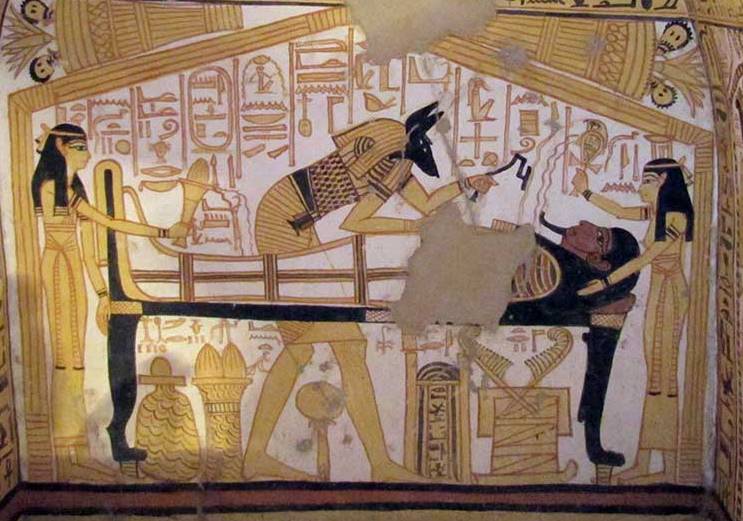
This brings me back to Kemet and its tools. The iron for why people settled in Tennessee during the frontier days. Why they needed Africans in the first place to conquer this land. The knowledge. Metorietic iron on a wood handle was used in the Opening of the Mouth Ceremony. The irony (no pun intended), of Black Bob being assaulted with an adze, similar to the instrument used in rituals to Open the Mouth, or be seen. 
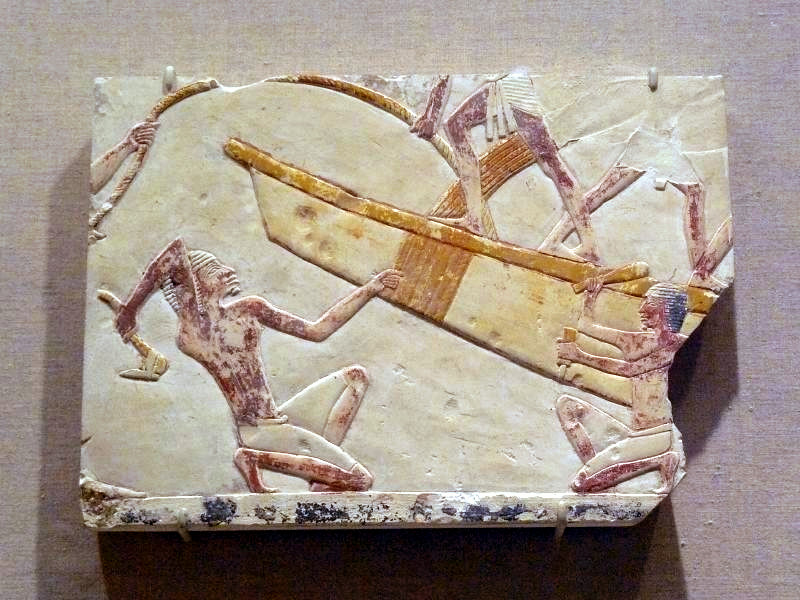

The adze is depicted in ancient Egyptian art from the Old Kingdom onward.[1] Originally the adze blades were made of stone, but already in the Predynastic Period copper adzes had all but replaced those made of flint.[2] While stone blades were fastened to the wooden handle by tying, metal blades had sockets into which the handle was fitted.


A depiction of an adze was also used as a hieroglyph, representing the consonants stp, "chosen", and used as: ...Pharaoh XX, chosen of God/Goddess YY...
The ahnetjer (Manuel de Codage transliteration: aH-nTr) depicted as an adze-like instrument,[3] was used in the Opening of the Mouth ceremony, intended to convey power over their senses to statues and mummies. It was apparently the foreleg of a freshly sacrificed bull or cow with which the mouth was touched

The Egyptian terms for the ceremony are wpt-r and wn-r, both translating literally to "opening of the mouth." The verb wpi denotes an opening that entails splitting, dividing or separating, and is used to describe the separation of two combatants, the dividing of time or even a determination of the truth. The verb wn emphasizes accessibility and exposure, used in contexts such as wn-hr, literally "open the face", but more correctly meaning "see" or "be seen".
Re: Abydos Egypt - Graham Hancock Official Website
1. Setep
Wood; New Kingdom
From the mortuary temple of Queen Hatshepsut
Rogers Fund, 1925
The Metropolitan Museum of Art 25.3.40
2. Adze
Bronze, wood and leather; New Kingdom
From the mortuary temple of Queen Hatshepsut
Gift of the Egypt Exploration Fund, 1896
The Metropolitan Museum of Art 96.4.7
3. Pesesh-kef knife
(replica)
"offering ritual in which two blades of meteoric iron, called the ntjrwy, are said to open the mouth. Faulkner translates this spell as "O Osiris the King, I split open your mouth for you gods iron of Upper Egypt, 1 ingot; gods iron of Lower Egypt, 1 ingot."
The ritual was thus be performed with various implements, most commonly a wood-carving adze, which were touched to the lips by the officiating priest. An adze was an arched metal blade fasted across the top of a wooden handle with leather thongs, used in woodworking. The ceremonial adze was made from the metal of heaven, bi3 n pt, meteoric iron. The adze mimicked carving and sculpture, logical if the Funerary ceremony evolved from the ritual performed on a statue.

Another implement often depicted in the ceremony was the psh-kef knife. The psh-kef knife is first attested in prehistoric tombs as early as the Naqada I period.
Psh-kf sets were limestone platters with recesses that usually hold the two ntjrwy blades, a blunt psh-kf knife, two tiny bottles and four tiny cups. The bottles and cups are half of light-color and half of black. The same set of implements is listed together in the inventories of temple equipment found at the mortuary temple of Neferirkare at Abusir.

The implements used in the Pyramid Text ritual continue to appear in private tombs of the Middle Kingdom, but a rather different version of the ritual also appears in the Coffin Texts. Now Ptah joins Horus to open the deceaseds mouth, then Ptah and Thoth transform the deceased into an akh, and Thoth replaces the heart in the body, so that the deceased remembers what has been forgotten and can eat bread as desired."

Give us this day our daily bread. After the opening of the mouth with the iron instrument from heaven we today call from a meteor because it is not found on earth, the deceased could eat bread. Then the mouth is opened with the ntjrwy tool, and the mummy is presented to the son "who loves him." More scenes depict the son coming to the House of Gold, opening the mouth with the mdjdft-tool, and touching the mummys mouth with the little finger again.
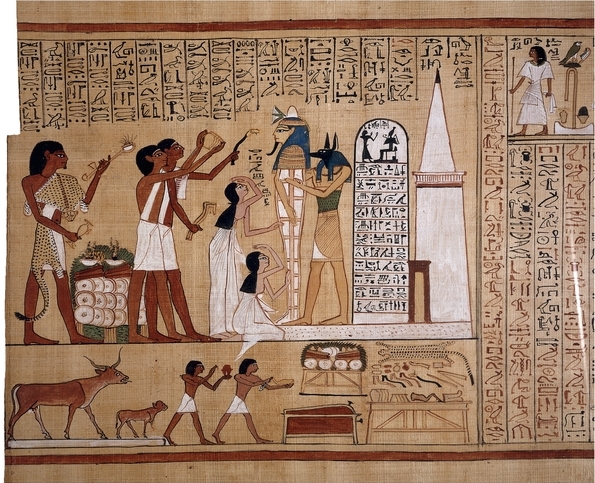
Hunefer, Book of the Dead (article) | Khan Academy
Egyptian Occult History: Opening of the mouth ceremony
Carpenter's Adze from a Foundation Deposit for Hatshepsut's Temple ca. 1479–1458 B.C.
Carpenter's Adze from a Foundation Deposit for Hatshepsut's Templeca. 1479–1458 B.C.

Friday, October 5, 2012

Seshat, Ocean Goddess and Creation Stories in East Africa

We stand tall because we stand on the shoulders of our ancestors...

My notes from Sept 2, 2012,
Mawu sent Adanhu and Yewa from the sky with Ayida Weddo. To me this story sounds very similar to the Adam and Eve story. The slaves brought over who carried these stories thought so as well, it was why they accepted the doctrine because it was their truth, but told in the way of the foreigners that brought them here. They noted that the key difference was the Christian inclusion of the fruit in the creation story (Dahomean Narrative: A Cross Cultural Analysis by Melville J. Herskovits). They stated Legba does not give fruit. In my opinion this is because the fruit in the bible creation story is symbolic of knowledge.

Mawu was the moon god. Lisa was the sun god. In their creation story only Mawu can give sekpoli (breath of life). Their story includes a monkey and Veve of Damballa (sky godm Damballah-rainbow serpent, becongo of Angola and Bantu) with a 7 pointed star on top. They associated this with Christ, Our Lady of Mercy, St Patrick, and Moses. The Black Madonna of Czestochowa.

What was striking to me in how this connects to Egypt was Ayida Weddo representation of holding up the heavens, the rainbow serpent. They also associate red with male, and blue with female. This reminded me of Shu & Nut in the Egyptian pantheon.

Yewa was said to make record of tombstones and was associated with the final resting place. There were several other attributes:

  1. maintained garden of rare flowers
  2. virgin
  3. looked in his EYEs (sin)
  4. Fest day is 10/30
  5. cemetary tools are known, other tools are secret
  6. knowledge of embalming, body preservation, passing over.
  7. she likes silence, no sex
  8. Day is Thursday
  9. maiden-old maids, fierce, independent, crone, wisdom
  10. Egg is placed on a mound of flower in ritual to her
  11. rules mind, intellect, cosmic equilibrium
  12. Veve Damballah emblems all have stars, some with a heart , cross, two right angles inverted.
Yeye means mother, Awa means our. so her names means Our Mother. She was compared to Our Lady of the Homeless and the Virgin of Montserrat. The number is 11 and its multiples (Seshat was noted as the women of the 11th hour in instances of transformation into the otherworld and the souls travel to heaven. She stood at the last gate in the journey into the Duat, only achieved after the soul could defeat the serpent.)
"Behold", said Ra, "I will send SHU to breath upon GEB, and he will have air that is sweet and blue, and I will kiss him and all manner of vegetation will clothe him." Now the hands (PTAH) pushed together GEB and NUIT, and from this union came forth all manner of living things. 
During this union the great serpent APEP entered into many of the living beings and told them, "Perhaps RA was not so vigilant, and what of it if he saw them do things that he would not approve of; he was not the all-powerful and the night was just as beautiful as the day..."

In Egypt Nut (sky goddess):
  1. Having power over the water Khort-Neter
  2. Sycamore Tree of Nut
  3. Egg of Nekek-ur
  4. Wore a blue robe or rainbow colored robe.
  5. Apep-Rainbow Serpent
September 9, 2012 notes

I came across info on Yoruba then back to New Orleans and Voodoo, Marie Luvoux. I listened to a webcast where she was described as the "architect of New Orleans" she had a Congolese background. 
Yemaja(Yemoja, Yemaya, Yemaja) is considered to be the greatest deity in Santeria. She is of all time. She is the mother of all things. In the bible the creation story/eden and serpent-knowledge. Without Yemaya their would be destruction and death she germinates the seed. 

Comes from the Ifa Nigeria Oresha. Osha-of the sea. Olugun-bottom of the sea. among the Benin/Ghanian/Togo-spirit of the ocean. She is transatlantic slave trade, mother of water. In voodoo-Hegway capt of the sea. La Terena-sustunance from ocean, mother of the waters. The ocean bring her number is 7. 9/7 is her birthday. 9/10 is Marie Lavous. 9/8 Oshun. 7 is the master number. 3 Trinity, 7 creation, 9 completion. Divine Mathematics. Her food offerings are watermelon, celery, watercrest, molases. Her day is Saturday.Yemaya/Yemoja/Yemoja- color is blue and white. Our lady of Regla and Our Lady of Immaculate Conception. Ymoja Yemowo Mami Wata.

  • Brazil the names are Yamanja, Iemanja, Janaina. 
  • In Cuba Yemaya Yemayah, Iemanya. In Haiti La Sirene, La Siren (Mermaid). 
  • USA Yemalla, Yemana, Yemoja. Uruguay Ienanja. 
  • Dominican Republic Yemalla, La Diosa der mor ( sea goddess). 
Her symbol symbolizes anything ocean related. 2 tailed mermaid, 7 bracelets, 7 blue and 7 white beads.
Food Fish, coconut, watermelon, cantaloupe, white wine, seafood, coffee, lettuce.
Feast Day is 9/7 (Santeri). 2/2 (Brazil).
Chakra is heart.
Animals are dolphins, ducks, geese, swans, sea horses, and blue butterflies.

Veve Baron Samedi
Legend holds that one must not look at Ashaba, she is so beautiful you can not look at her directly. Benin Fa - spirit of celestial palm tree (Ifa).
Veve of Maman Brigitte

"Yemonja is Yeye mo eja or mother of fishes. She is not just the to layer of the Sea(because that is where most of the fish live) she is also the Orisha of the Ogun river in Nigeria and the spokes person of Olokun the Orisha of the Ocean. We call on Yemonja or Ora so that she can send our prayers to Olokun. Remember there are different Yemonjas, Ashaba, Asesu, Ogunte, Mayelewo, etc." Orijuwon

Seshat, "She is drawn with her standard atop her head, wearing the spotted leopard skin robes of the Setem priests, the funerary priests who are drawn on temple friezes with the spotted robe and mask of Yinepu (Greek: Anubis). Where other Gods hold the was-scepter in hand, she bears one of notched palm leaves that terminates at the bottom with a tadpole which rests on the symbol of eternity"http://www.lowchensaustralia.com/names/egyptian-goddesses/s.htm

OME. The palm tree, from the leaves of which the dresses used by the dancers of the OBUDU are made.

The leopard is known by the names ATALAGBA, OGYUHA, EKME, and OGIAME or queen.
OGIAME reminds me of the XIVILI word KAMA, royal wife or queen. OGIE-CI is the word the Bini use for the King indigenous to the country, equivalent to NKICI CI of the BAVILL
When a man killed a leopard he had to take it to the OBA, who gave the hunter a boy and a girl in exchange for it. The OBA used to try very hard to obtain the leopard alive, so that he might sacrifice it. On doing so he would put his finger into its blood and make a mark with it on his forehead, from his hair to his nose. Fans for his use were made of the leopard's skin, or it was made into a coat for the great war chief EZOMO or OJUMO. The claws also were strung together and worn by this chief as a band around his head.
Women were not allowed to look at the leopard's face.
The dance connected with the leopard ceremonies is called IGWE.

Naples Archaeological Museum Picture of Sculpture of Atlas with Farnese Globe on his shoulders. Roman Copy of Hellenistic original, 2nd Century AD.  Oldest known representation of the celestial sphere


"Orpheus," says he, "introduced from Egypt the greatest part of the mystical ceremonies, the orgies that celebrate the wanderings of Ceres, and the whole fable of the shades below. The rites of Osiris and Bacchus are the same; those of Isis and Ceres exactly resemble each other, except in name." Now, as if to identify Bacchus with Nimrod, "the Leopard-tamer," leopards were employed to draw his car; he himself was represented as clothed with a leopard's skin; his priests were attired in the same manner, or when a leopard's skin was dispensed with, the spotted skin of a fawn was used as a priestly robe in its stead. This very custom of wearing the spotted fawn-skin seems to have been imported into Greece originally from Assyria, where a spotted fawn was a sacred emblem, as we learn from the Nineveh sculptures; for there we find a divinity bearing a spotted fawn or spotted fallow-deer (Fig. 21), in his arm, as a symbol of some mysterious import. The origin of the importance attached to the spotted fawn and its skin had evidently come thus: When Nimrod, as "the Leopard-tamer," began to be clothed in the leopard-skin, as the trophy of his skill, his spotted dress and appearance must have impressed the imaginations of those who saw him; and he came to be called not only the "Subduer of the Spotted one" (for such is the precise meaning of Nimr--the name of the leopard), but to be called "The spotted one" himself. We have distinct evidence to this effect borne by Damascius, who tells us that the Babylonians called "the only son" of the great goddess-mother "Momis, or Moumis." Now, Momis, or Moumis, in Chaldee, like Nimr, signified "The spotted one." Thus, then, it became easy to represent Nimrod by the symbol of the "spotted fawn," and especially in Greece, and wherever a pronunciation akin to that of Greece prevailed. The name of Nimrod, as known to the Greeks, was Nebrod. * The name of the fawn, as "the spotted one," in Greece was Nebros; ** and thus nothing could be more natural than that Nebros, the "spotted fawn," should become a synonym for Nebrod himself. When, therefore, the Bacchus of Greece was symbolised by the Nebros, or "spotted fawn," as we shall find he was symbolised, what could be the design but just covertly to identify him with Nimrod?


* In the Greek Septuagint, translated in Egypt, the name of Nimrod is "Nebrod."


** Nebros, the name of the fawn, signifies "the spotted one." Nmr, in Egypt, would also become Nbr; for Bunsen shows that m and b in that land were often convertible.


We have evidence that this god, whose emblem was the Nebros, was known as having the very lineage of Nimrod. From Anacreon, we find that a title of Bacchus was Aithiopais--i.e., "the son of Aethiops." But who was Aethiops? As the Aethiopians were Cushites, so Aethiops was Cush. "Chus," says Eusebius, "was he from whom came the Aethiopians."


Atlas (/ˈætləs/; Ancient Greek: Ἄτλας) held up the celestial sphere

The first part of the term "Atlantic Ocean" refers to "Sea of Atlas", the term "Atlantis" refers to "island of Atlas".

(the idea of Atlas carrying the Earth is not correct according to the original myth) on his back. One of Heracles's labours was to collect the apples of the Hesperides, guarded by Ladon. Heracles went to Atlas and reasoned with him. Eventually, Atlas agreed to collect the apples, and Heracles was left to carry the weight. Atlas tried to leave Heracles there, but Heracles tricked him and Atlas was left to carry the heavens forever. In his epic Odyssey,Homer refers to this Atlas as "one who knows the depths of the whole sea, and keeps the tall pillars who hold heaven and earth asunder".

The armillary or celestial sphere is traced to Hipparchus (said inventor of trig), who traces it to Eratosthenes (said inventor of geography). Eratosthenes was a "Greek" mathematician, geographer, poet, athlete, astronomer, and music theorist. A lot of specialties for one man to invent..... Needless to say, although given a title as a Greek he was born in Libya and was the Chief Librarian of the Great Library of Alexandria. He died in Alexandria. Both Libya and Alexandria, Egypt are in Africa.