Showing posts with label pedj shes. Show all posts

Thursday, July 23, 2020

My Journey to Recognizing the 1800s Adze Used to Assault a Tennessee Black Man Having its Origin in Africa

Years ago I stumbled upon a historical figure called Robert Renfro, also called Black Bob. I was intrigued by him as he was considered a hero in his day by Nashvillians and became the first emanepated black and first black business owner in Tennessee. Actually, he helped found Tennessee. Many Africanims emerged from his story as I read into his life. Kemetic Africanisms. He was on the boat that founded Fort Nashboro with masonic surveyors from Virginia. Initially this was call the district of Meroe, and later became the state of Tennessee. This term was famiar to me from my African studies of Nubia and Kemet and the Moors. Black Bob was a friend of Andrew Jackson, a freemason. When I went to Andrew Jackson's home, which is a museum now, I saw a book from his lodge, the first lodge in Tennessee, it was the first book and listed the names of the first head people of the lodge. Those names were the same names that I read on Black Bobs emancipation papers signed 5 years after Tennessee became a state. He did not fit the mold of the story of who black people were in America during the 17-1800s. "Bob" has a dual meaning in freemasonry. Part of it comes from the plum bob surveying tool. Which is an interest to me and my studies of Seshat. Which is also see with her holding it in the Temple of Edfu. 

One of the things about Black Bob that I found interesting was his lawsuit won at the hands of his friend and former attorney, now judge, Andrew Jackson. It was a lawsuit against a schoolmaster, Anderson Lavender, who assaulted Black Bob for talking proper  on April 25, 1800. The Grand Jury of Davidson County indicted him on this charge. Andrew Jackson, Archibald Roane (future Governor) and David Campbell were the judges when the suit was before the Superior Court, all freemasons in Nashville. 


John Hamilton, the attorney for the State wrote in May of 1800 that Anderson Lavender, “Did make an assault and battery with an intent him the said Bob then and there feloneously, wilfully and of his malice aforethought to kill & murder, against the Statue in such case made and provided, and against the peace and dignity of our State.” Tr, TdaCo-MDSC Law Min. Bk., 1788-1803, pp 316-317. From Legal Papers of Andrew Jackson pg 162. What does the foot-adze that Lavender carried in his right hand to kill Bobb look like?


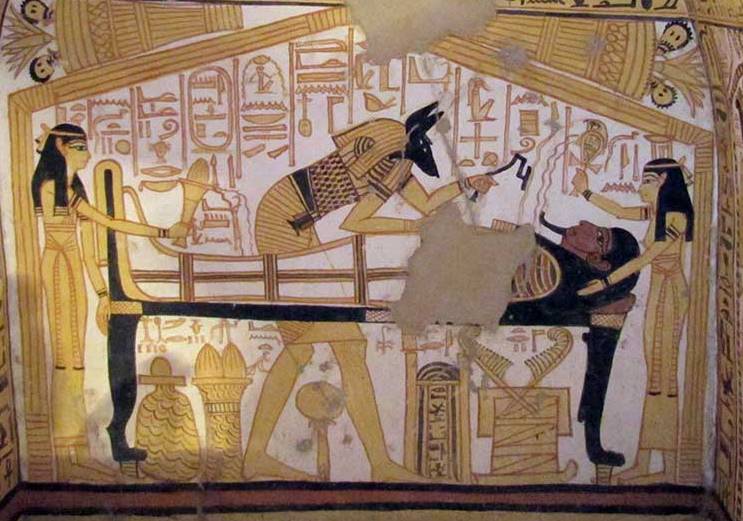
This brings me back to Kemet and its tools. The iron for why people settled in Tennessee during the frontier days. Why they needed Africans in the first place to conquer this land. The knowledge. Metorietic iron on a wood handle was used in the Opening of the Mouth Ceremony. The irony (no pun intended), of Black Bob being assaulted with an adze, similar to the instrument used in rituals to Open the Mouth, or be seen. 
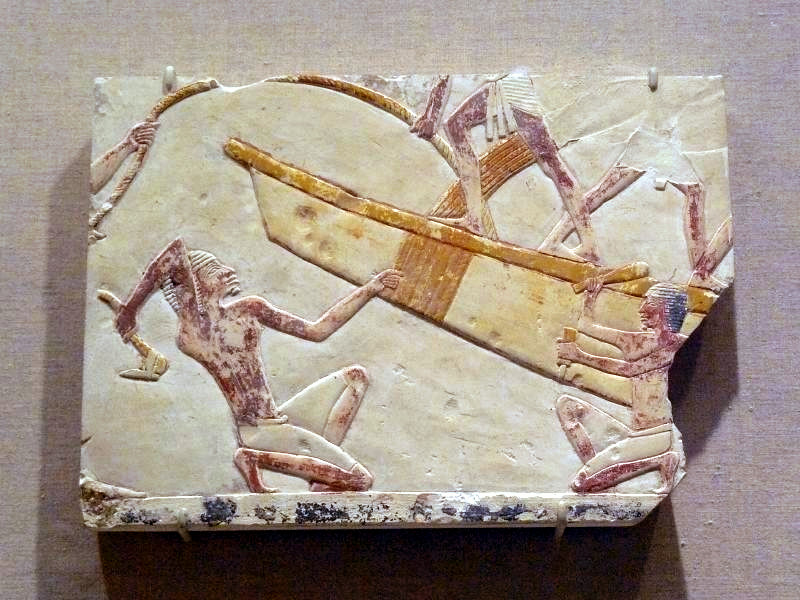

The adze is depicted in ancient Egyptian art from the Old Kingdom onward.[1] Originally the adze blades were made of stone, but already in the Predynastic Period copper adzes had all but replaced those made of flint.[2] While stone blades were fastened to the wooden handle by tying, metal blades had sockets into which the handle was fitted.


A depiction of an adze was also used as a hieroglyph, representing the consonants stp, "chosen", and used as: ...Pharaoh XX, chosen of God/Goddess YY...
The ahnetjer (Manuel de Codage transliteration: aH-nTr) depicted as an adze-like instrument,[3] was used in the Opening of the Mouth ceremony, intended to convey power over their senses to statues and mummies. It was apparently the foreleg of a freshly sacrificed bull or cow with which the mouth was touched

The Egyptian terms for the ceremony are wpt-r and wn-r, both translating literally to "opening of the mouth." The verb wpi denotes an opening that entails splitting, dividing or separating, and is used to describe the separation of two combatants, the dividing of time or even a determination of the truth. The verb wn emphasizes accessibility and exposure, used in contexts such as wn-hr, literally "open the face", but more correctly meaning "see" or "be seen".
Re: Abydos Egypt - Graham Hancock Official Website
1. Setep
Wood; New Kingdom
From the mortuary temple of Queen Hatshepsut
Rogers Fund, 1925
The Metropolitan Museum of Art 25.3.40
2. Adze
Bronze, wood and leather; New Kingdom
From the mortuary temple of Queen Hatshepsut
Gift of the Egypt Exploration Fund, 1896
The Metropolitan Museum of Art 96.4.7
3. Pesesh-kef knife
(replica)
"offering ritual in which two blades of meteoric iron, called the ntjrwy, are said to open the mouth. Faulkner translates this spell as "O Osiris the King, I split open your mouth for you gods iron of Upper Egypt, 1 ingot; gods iron of Lower Egypt, 1 ingot."
The ritual was thus be performed with various implements, most commonly a wood-carving adze, which were touched to the lips by the officiating priest. An adze was an arched metal blade fasted across the top of a wooden handle with leather thongs, used in woodworking. The ceremonial adze was made from the metal of heaven, bi3 n pt, meteoric iron. The adze mimicked carving and sculpture, logical if the Funerary ceremony evolved from the ritual performed on a statue.

Another implement often depicted in the ceremony was the psh-kef knife. The psh-kef knife is first attested in prehistoric tombs as early as the Naqada I period.
Psh-kf sets were limestone platters with recesses that usually hold the two ntjrwy blades, a blunt psh-kf knife, two tiny bottles and four tiny cups. The bottles and cups are half of light-color and half of black. The same set of implements is listed together in the inventories of temple equipment found at the mortuary temple of Neferirkare at Abusir.

The implements used in the Pyramid Text ritual continue to appear in private tombs of the Middle Kingdom, but a rather different version of the ritual also appears in the Coffin Texts. Now Ptah joins Horus to open the deceaseds mouth, then Ptah and Thoth transform the deceased into an akh, and Thoth replaces the heart in the body, so that the deceased remembers what has been forgotten and can eat bread as desired."

Give us this day our daily bread. After the opening of the mouth with the iron instrument from heaven we today call from a meteor because it is not found on earth, the deceased could eat bread. Then the mouth is opened with the ntjrwy tool, and the mummy is presented to the son "who loves him." More scenes depict the son coming to the House of Gold, opening the mouth with the mdjdft-tool, and touching the mummys mouth with the little finger again.
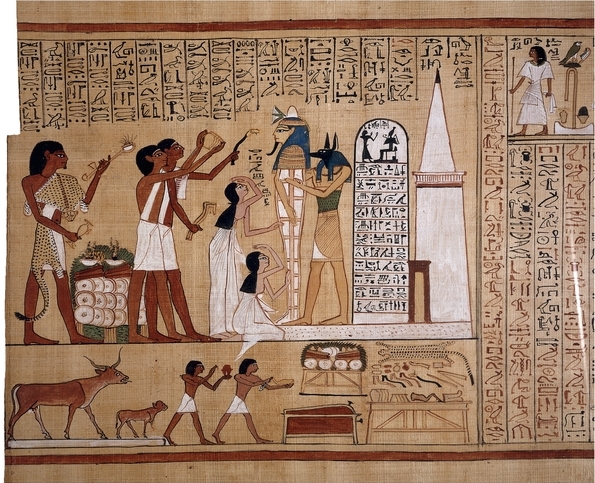
Hunefer, Book of the Dead (article) | Khan Academy
Egyptian Occult History: Opening of the mouth ceremony
Carpenter's Adze from a Foundation Deposit for Hatshepsut's Temple ca. 1479–1458 B.C.
Carpenter's Adze from a Foundation Deposit for Hatshepsut's Templeca. 1479–1458 B.C.

Sunday, November 11, 2012

Nashville's Replica of Cheops at Mt Olivet

When I found out that Nashville's replica of Cheops pyramid from the Centennial Expo was a tomb in a cemetery with the name of Mt Olivet (Olive), I had to check it out. Heading to my sisters house I happened to drive by there one evening, noticing the sign, and also that was a tour coming up on the 13th. I made note and came back for the tour. When I stepped foot on the inside I was amazed at how many obelisk were on the site. And the symbols, the cross in the circle. For reference on the name of this cemetery and how it connects with ancient KMT I note, "Mount of Olives is the hill facing the old city of Jerusalem, on the eastern side of Kidron valley. Its name came from the olive trees that once grew on its hillside from ancient times. According to Jewish tradition, the Messiah will appear here and bring the dead back to life. Therefore, the hillside became the most holiest cemetery, and the hillside is covered by thousands of grave stones." Olives are a crop that was cultivated in ancient Egypt. It was prized among the culture and is adorned on many walls. The most famous being Akhenaten's olive branch with outstretched hands from the 18th Dynasty. It is possible that ancient cities took their names, and/or named great sites as we do today from ancient Egypt in honor of the great agriculturalist and architects.

So now lets discuss how this relates to early Masons in Nashville and how they have used egyptian symbols in local architecture.

The great pyramid of Cheops and the Golden Number

Eugene C. Lewis was an engineer but also spearheaded the Centennial Celebration of TN. Eugene was interested in all of the crafts Seshat was known as being the oversear or "goddess" of; architecture, mathematics, building, astrology, and surveying. At Eugine's tomb is an arrow pointing to a 5 pointed star.
Scene from the tomb of Djeserkeresonb. 18th Dynasty
Djeserkeresonb and his assistants carry out a survey of the fields.
The coil of rope cannot be seen due to the damage done to the wall.

Scene from the tomb of Menna showing surveying of the
land in fields for the calculation of taxes.
Menna is depicted in the top left and bottom right--his face obliterated.
There are many correlations with Mason's and the Egyptian presence in Nashville. The committee that lead the design of the Downtown Presbyterian Church to be rebuilt in its Egyptian style held their initial meeting at the Masonic Lodge. Many of the men with Teken (Obelisk) above their graves at Mount Olivet are Masons. Mr Catron was a Mason. His tomb is a replica of an ancient Egyptian sarcophagus. Many of the notables of the church, which is a replica of an Egyptian temple, are buried at Olivet. The cornerstone foundation ceremony was performed at the Presbyterian temple as well. This ritual originated in Egypt and was presided over by Seshat. The cornerstone foundation ceremony, in my opinion,  is a form of the pedj shes (astrological/architecture/survey science) associated with Seshat that became ritualized over time and translated as the "Stretching of the Cord Ceremony". "This ritual is related to laying out the foundations of temples and other important structures in order to determine and assure the sacred alignments and the precision of the dimensions. Her skills were necessary for surveying the land after the annual floods to reestablish boundary lines. The priestess who officiated at these functions in her name also oversaw the staff of others who performed similar duties and were trained in mathematics and the related store of knowledge. Much of this knowledge was considered quite sacred and not shared beyond the ranks of the highest professionals such as architects and certain scribes" from Wiki. This practice goes back, as is noted in my previous blogs, to the early matrilenial society in the Naqadda period and Old Kingdom, when women passed on land ownership from mother to daughter and kept records of these transfers in early writing script.
A surveyor checking the boundary stone.
The picture was taken from a Theban tomb probably belonging to Nebamun. James, T. G. H. 1979. An Introduction to Ancient Egypt. The Trustees of the British Museum. London

"This sacred ritual is described in numerous hieroglyphic inscriptions and depicted in reliefs during various epochs of the ancient civilisation. Quoted for the first time on the Palermo Stone in year x + 7 years (c.3005 B.C.) of the fifth king of the First Dynasty, Meretneit (also called Den), for the dedication ritual of what was the House (called) “Thrones-of-the-Gods” (by) the priest of (the goddess) Seshat. Coming up on this stone of history another two times – for the 2nd Dynasty ruler Neterimu’s seventh year dedication of the House (called) Hor-Ren, and the 4th year building ceremony (for) the House (called) “Shelter-of-the Gods” during the period of the last King of the Second Dynasty, known as King X (known to be Khasekhemwy) because his name was also missing (c.2687 B.C.). Upon the various images found in varying places from different eras the king is shown with the goddess Seshat, often referred to as the goddess of the Scribes of the Fields and wife of the ibis headed god Thoth, hammering in stakes around which the sacred cord is tightly wrapped. Such stakes were placed by astronomical star observation to the Great Bear constellation (Ursa Major) and other fainter polar stars at the major corners of the proposed building.

Such stretched measuring line around the perimeter of the stakes so placed was then dropped to the ground in the Loosening of the Cord to mark the lines of trenches to be dug out for the footings of the construction.....

At various times of Egyptian history this divine measuring device was housed in a cache bearing the Ram’s Head of Amun (statues of Penanhor and Amenemhet-Surer) shown clearly in the two statues of these Scribes in the kneeling position with the sacred cord resting in their laps. The same holy encasement can be seen in the line drawings from the tomb of Scribe Amenhotpe-si-se on the upper arms of the survey assistants in the depiction of measuring the fields from around 1400 B.C. Another statue of the Scribe Semenmut shows the sacred rope with a cache sculpted in the shape of the head of Thutmose II’s daughter Nefrura for whom the scribe was a tutor.......
In the hieroglyphic inscription accompanying the image at Edfu the king
himself states:
      “I hold the peg.  I grasp the handle of the club and grip the measuring cord with
       Seshat.  I turn my eyes to the movements of the stars.  I send forth my glance to
       Ursa Major.  I make firm the four corners of thy temple.”   "

Sycamore Mills/Sycamore Tree of Nut are all found around Mt Olivet and in Egypt and Israel. There are many similarities of note. There are draped cords throughout adorning tombs at the cemetery  The science of the stretching of the cords was practiced by many of the men in the cemetery  Including the men who planned the building of the Egyptian temple in Downtown Nashville, ordered to be funded and built before the capitol of Tennessee, attesting to its importance. Needless to say, not only did these men practice Egyptian ritual in their lives, they built the temples, used the architecture principles, and ensured their final resting place mimicked what can be found in Egypt. Eugene, the engineer being one who made it quite obvious. He chose to build and memorialize himself in Egypt's pyramid known to us today to incorporate sacred mathematics, the Golden Radio, here in Nashville, TN. Now to find out where that arrow is pointing...