Wednesday, January 15, 2014

Pledge of Allegiance an Ancient Egyptian Ritual?

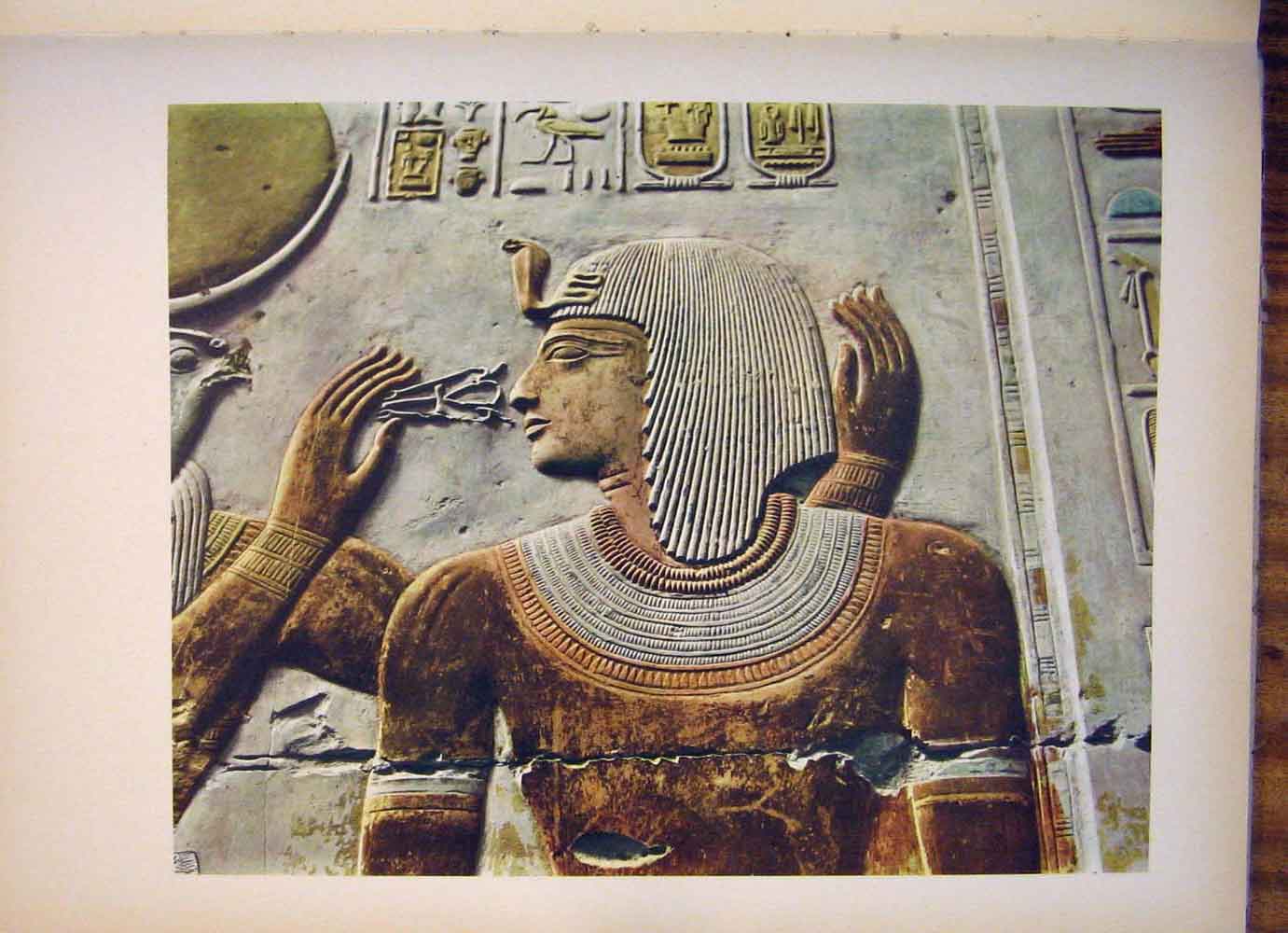
Song of Khuwyt

This sounds and looks like the pledge of allegiance to me so I did some digging into the creater of the American ritual to see if that person was in some way knowledgable or connected to Egyptian writings. Turns out he was a member of he Masonic Lodge.


From http://www.osirisnet.net/tombes/nobles/antefoqer/e_antefoqer_04.htm
"To the right, the area is divided into two sub-registers.

In the top one, two men (identified as "treasurer") offer long pieces of cloth and two items wrapped in cloth, whilst saying "For your Ka!". Behind them, two kneeling lector priests make the gesture of jubilation, the henu: left arm on the chest and right arm raised, whilst the text above them states: "Reciting the formulae of transfiguration by the lector priest".

A line of text separates the two sub-registers, the later half of which is destroyed. This is repeated, more in tact, between a similar pair of registers on the south wall, where the translation will be given.

In the sub-register below, two other officiants recite the classic formula of offering, the hotep di nesu, to Ra and to Geb. In front of them, another pours a libation of water, dedicating the offerings of the list. "

As I looked at this deeper it became clear to me that this is the Pledge of Allegiance. Just as the Masons have used Egyptian concepts, rituals, and science in building, architecture, and dress. The Mason who was commissioned to develop the Pledge of Allegiance was drawing on the power of Egyptian prayer rituals for the American flag and its principles.

ROYAL JUBILEE

Monday, November 25, 2013

Nubian Princess Amenirdis I in Medinet Habu & Seshat

In Amenirdis's funerary chapel there are inscriptions of the performance of the stretching of the cord ceremony, a ritualization of the science of the astronomical building principles passed down by Seshat. 

Also, of this time period we see the swaztica symbol which has roots in African architecture teachings. I will discuss more about this symbol and the Egyptian building trade in other blogs. For now just know a connection exist as exemplified in this ancient drawing.


Funerary Stela of Meteye
This Stela dates back to the 2nd to 3rd Centuries. It is has a reddish-white undercoat. It comes from Grave 275, Karanog. The stela is located in Cairo, Egyptian Museum JE40229.
The couple Meteye and Abakharta stand under the inner wings of the sun disk. Meteye wares her hair with a topknot and cornrows. This man may be either Meteye's husband or father. (I am uncertain because the words ab-a can be interpreted as `[her] father'.
If this is the correct reading aba Kharta would mean `her father Kharta'.)The grave was excavated by Woolley-Randall- MacIver at Karanog.
The skeleton in the grave was of a woman. The pointed breast on the figure indicate that she was a young women. Standing side by side suggest that this man was her husband. Since the grave contained only one skeleton we can imagine that Abakharta was depicted on this stela to show his devotion to his wife.There are three sets of inscription on this stela.
There are inscriptions in front of Meteye and Abakharta, and an inscription between the legs of Abakharta.Reading from right to left beginning with the inscription between the legs of Abakharta, then the inscription before Abakharta and finally the one in front of Meteye we have the following:Inscription between Abakharta's legs.
P .. š ….o …."Pray for the patron to commence……"
Inscription in front of the man:
Wosi .. ne. Sore… yi-ne. Abkharta… ke ….lo …..wi-ne... a…kh…m…še.."
Translation
Isis the Good. Osiris the eternal. Abakharta gives permission (for) the offering of this Object of Respect (Meteye) to acquire greatness (and) protection."
Inscription in front of the woman:
Woš..i-ne…šore.. yi-ne..Meteye… qo …wi…ato ….mh…ene… š.. o-a….tene
Translation
"Isis the good. Osiris the eternal. Meteye , renew (her) honor down the path (to) abundant alms giving. The patron [Meteye] has commenced the Rebirth".


Thursday, October 31, 2013

GRAMMER AND GROMA: THE SURVEYORS CROSS


Grammer, writing, education, Seshat.... The plot thickens. Litterally. The "gromatic writers" were technical writers who codified their techniques of surveying. The groma, was the surveyors cross.


finitores mentioned in the early writers,[2][3] who in the later periods were called mensores and agrimensores. The business of a finitor could only be done by a free man, and the honorable nature of his office is indicated by the rule that there was no bargain for his services, but he received his pay in the form of a gift. These finitores appear also to have acted as judices, under the name of arbitri (sing. arbiter), in those disputes about boundaries which were purely of a technical, not a legal, character. The first professional surveyor mentioned is Lucius Decidius Saxa, who was employed by Mark Antony in the measurement of camps


Rider with birds and a winged figure, perhaps Nike (Victory). Lakonian black-figured kylix, ca. 550–530 BC.


An auspice is one who divines through the study of birds and its movements. In Greece the practice was familiar to the king of Alasia in Cyprus who has need of an 'eagle diviner' to be sent from Egypt.

According to unanimous testimony from ancient sources the use of auspices as a means to decipher the will of the Gods was more ancient than Rome itself. The use of the word is usually associated with Latins as well as the earliest Roman citizens.

The 7 Pointed Star of Seshat Is The 1st Gnomon

Currently I am reading a book on the symbol of seshat that correlates its look and style of the look, style, and function of the vertical gnomon. It has been said that the closer one gets to truth the more applicable it is to many situations. Wiki defines a gnomon as:

A gnomon [ˈnoʊmɒn] NO-mon, from Greek γνώμων, gnōmōn, literally "one that knows or examines",[1][2] is the part of a sundial that casts the shadow.

The term has come to be used for a variety of purposes in mathematics and other fields.

Anaximander (610–546 BC) is credited with introducing this Babylonian instrument to the Greeks.[3]
Oenopides used the phrase drawn gnomon-wise to describe a line drawn perpendicular to another.[4]
Later, the term was used for an L-shaped instrument like a steel square used to draw right angles.
This shape may explain its use to describe a shape formed by cutting a smaller square from a larger one.
Euclid extended the term to the plane figure formed by removing a similar parallelogram from a corner of a larger parallelogram.
A three dimensional gnomon is commonly used in CAD and computer graphics as an aid to positioning objects in the virtual world. By convention, the X axis direction is colored red, the Y axis green and the Z axis blue.
Hero defined a gnomon as that which, added to an entity (number or shape), makes a new entity similar to the starting entity.
In this sense Theon of Smyrna used it to describe a number which added to a polygonal number produces the next one of the same type.
The most common use in this sense is an odd integer especially when seen as a figurate number between square numbers.
NASA astronauts used a gnomon as a photographic tool to indicate local vertical and to display a color chart when they were working on the Moon's surface.


The cantilever spar of this cable-stay bridge, the Sundial Bridge at Turtle Bay in Redding, California, forms the gnomon of a large garden sundial


Gnomon situated on the wall of a building facing Tiradentes Square, Curitiba

The Chinese also used the gnomon, mentioned in the 2nd century Nine Chapters on the Mathematical Art as being used much earlier by the Duke of Zhou (11th century BC).

In the northern hemisphere, the shadow-casting edge is normally oriented so that it points north and is parallel to the rotation axis of the Earth. That is, it is inclined to the horizontal at an angle that equals the latitude of the sundial's location. At present, such a gnomon should thus point almost precisely at Polaris, as this is within a degree of the North celestial pole.

On some sundials, the gnomon is vertical. These were usually used in former times for observing the altitude of the Sun, especially when on the meridian. The style is the part of the gnomon that casts the shadow. This can change as the sun moves. For example, the upper west edge of the gnomon might be the style in the morning and the upper east edge might be the style in the afternoon.

Gazalé, Midhat J. Gnomons, from Pharaohs to Fractals, Princeton University Press, Princeton, 1999. ISBN 0-691-00514-1.
Heath, Thomas Little (1981), A History of Greek Mathematics, Dover publications, ISBN 9780486240732 (first published 1921).
Laertius, Diogenes, The Lives and Opinions of Eminent Philosophers, trans. C.D. Yonge. London: Henry G. Bohn, 1853.


The important thing here historically for Africa is this women's symbol of Seshat being correlated to the shadows cast by the vertical gnomon, which is the foundation of architecture and surveying still used today. It is always exciting to explore early history and find connections with modern technology. As the saying goes in aegypt, there is nothing new under the Sun.

Tuesday, October 15, 2013

Corn Mother- Tracing the Pyramid Builders Through Agriculture


Corn was found in Egypt in the pyramids. Today, I was watching a video of Cahokia mounds that mentioned a Corn Mother. It made me think of the Media myth, which I believe has roots in Kmt and is a story of a an educated women who knows how to cultivate taken from Africa because of her knowledge to produce food and medicine. So I figured if a corn mother figurine with a similar story was found at a mound site, along with corn, maybe there is a connected between corn and Egypt. I had noticed corn in heiroglyphs before, the House of bread, Denderah. I had researched before to no avail the origin of corn in Egypt. So I put it aside. Until tonight. I came across this book by Gunnar Thompson called Ancient Egyptian Maize

I will come back to this topic at a later date. But I thought it noteworthy to post about corn mother as another feminine figure that follows the development of pyramid structures in cultures outside of Denderah. It is my belief that through tracing not only DNA, but the foods that people eat and the plants cultivated. We can gain a better understanding of the people who inhabited ancient civilizations.
Corn Mother


Wednesday, August 14, 2013

Breath of Life, Ankh

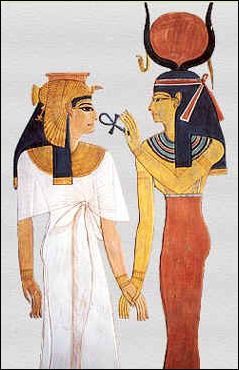
The dynastic Egyptian belief was that unless one of the chief gods or goddesses held the cross-like ankh to your nostrils you could not breathe in the breath of life, and could not therefore truly live.